
Tyler Gross | April 15, 2026 | Car Accidents
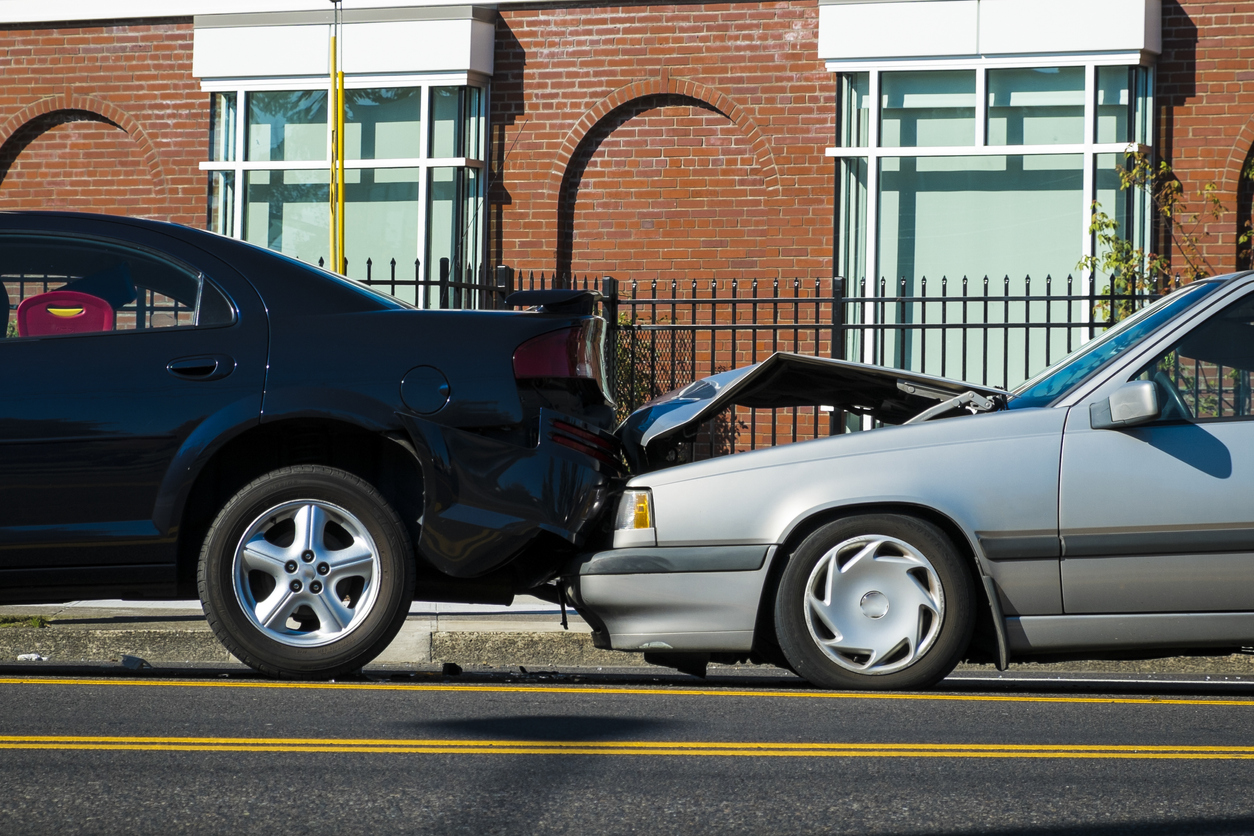
In most rear-end collisions, the driver who hits the vehicle in front is presumed to be responsible. This is because all drivers have a duty to maintain a safe following distance and stay alert to traffic conditions. If a driver fails to stop in time to avoid hitting the car ahead, it is typically seen as a failure to drive safely.
Common reasons the rear driver may be at fault include:
- Following too closely (tailgating)
- Distracted driving, such as texting or adjusting controls
- Speeding or driving too fast for road conditions
- Failing to pay attention to traffic signals or sudden stops
Because of this general rule, insurance companies often start with the assumption that the rear driver is liable. However, that assumption can be challenged in certain situations.
When the Front Driver May Share or Bear Responsibility
Although less common, there are scenarios where the front driver may be partially—or even fully—responsible for a rear-end collision. Liability depends on whether the front driver acted negligently or violated traffic laws.
Examples include:
- Sudden, unnecessary braking: If a driver slams on the brakes for no valid reason, they may contribute to the accident.
- Broken brake lights: If the front vehicle’s brake lights are not working, the rear driver may not have adequate warning to stop.
- Reversing unexpectedly: If a vehicle backs into another car, it may be considered at fault, even though the damage appears similar to a rear-end crash.
- Cutting off another driver: If a driver merges abruptly into a lane without enough space, the rear driver may not have time to react.
In these cases, fault may be shared between both drivers depending on the specific facts.
Multi-Vehicle Rear-End Collisions
Rear-end accidents can be more complicated when multiple cars are involved. In these chain-reaction crashes, more than one driver may be at fault.
For example, if one driver stops, a second driver hits them, and a third driver crashes into the second, each driver’s actions will be looked at separately. One driver may be responsible for the first impact, while another is responsible for the second.
In some cases, a driver may be pushed into another car because of the force of a crash behind them. When that happens, the driver in the back may be more at fault.
These types of accidents often require a closer look at the evidence, like police reports and witness statements, to determine who is responsible.
The Role of Comparative Fault
Florida follows a modified comparative fault system, which means more than one party can share responsibility for an accident. Under this system, each person involved is assigned a percentage of fault, and their compensation is reduced by that percentage.
For example, if you are found to be 20% at fault for a rear-end collision, your recovery would be reduced by 20%. However, you generally cannot recover damages if you are found to be more than 50% at fault for the accident.
How Liability Is Proven
Determining who is responsible for a rear-end collision involves reviewing several types of evidence, including:
- Police reports
- Photos of vehicle damage and the accident scene
- Traffic camera or dashcam footage
- Witness statements
- Vehicle maintenance records
Insurance adjusters and attorneys use this information to reconstruct what happened and determine fault.
What to Do After a Rear-End Collision
If you’ve been involved in a rear-end accident, taking the right steps can protect your claim:
- Seek medical attention, even if injuries seem minor
- Call the police and obtain an official report
- Document the scene with photos and videos
- Exchange information with the other driver
- Avoid admitting fault at the scene
You may also want to consult with a personal injury attorney who can evaluate your case and help you navigate the claims process.
Contact a Pensacola Car Accident Attorney at Gross & Schuster Injury Lawyers for a Free Consultation
While the rear driver is often presumed responsible for a rear-end collision, exceptions can apply depending on the circumstances. Every accident is unique, and determining liability requires a careful evaluation of the facts.
If you’ve been injured in an accident, please contact our experienced Pensacola car accident lawyers in Florida at Gross & Schuster Injury Lawyers to schedule a free consultation today. We have five convenient locations in Pensacola, Navarre, Crestview, Milton, and Mary Esther.
Gross & Schuster Injury Lawyers – Pensacola Office
803 N Palafox St
Pensacola, FL 32501
Phone: (850) 434-3333